 DialogSkills
Practise customer conversations before they count.
The sale, the complaint and the customer who is angry or in doubt. We build a lab where your staff practise your customer conversations, with customers who respond to what is actually said. Made by psychologists, with your name, products and customers.
“I’ve been waiting for three weeks.”The complaint

“This isn’t what we were promised.”The angry customer

“We’ve had a cheaper offer.”The cheaper offer
“I’ve done the sums myself.”The doubtful customer

“This is the third time I’ve been in touch.”In customer service
“It’s too expensive.”Value before discount

“What happens if we don’t sell?”The uncertain customer

“The board can’t agree.”When several people decide
A lab for customer conversations, built for you.
Today many employees learn the difficult customer conversations on real customers. In the lab they can practise them first, as many times as they need, before it counts.
There is no ready-made lab for customer conversations. We build it for you, and it can be built in English. Havlys Energi on this page is a fictional company, and the screenshots are in Norwegian.
From conversation to feedback.
The parts below exist in our labs today. The example, the solar panel company Havlys Energi, is fictional, and the screenshots are in Norwegian.

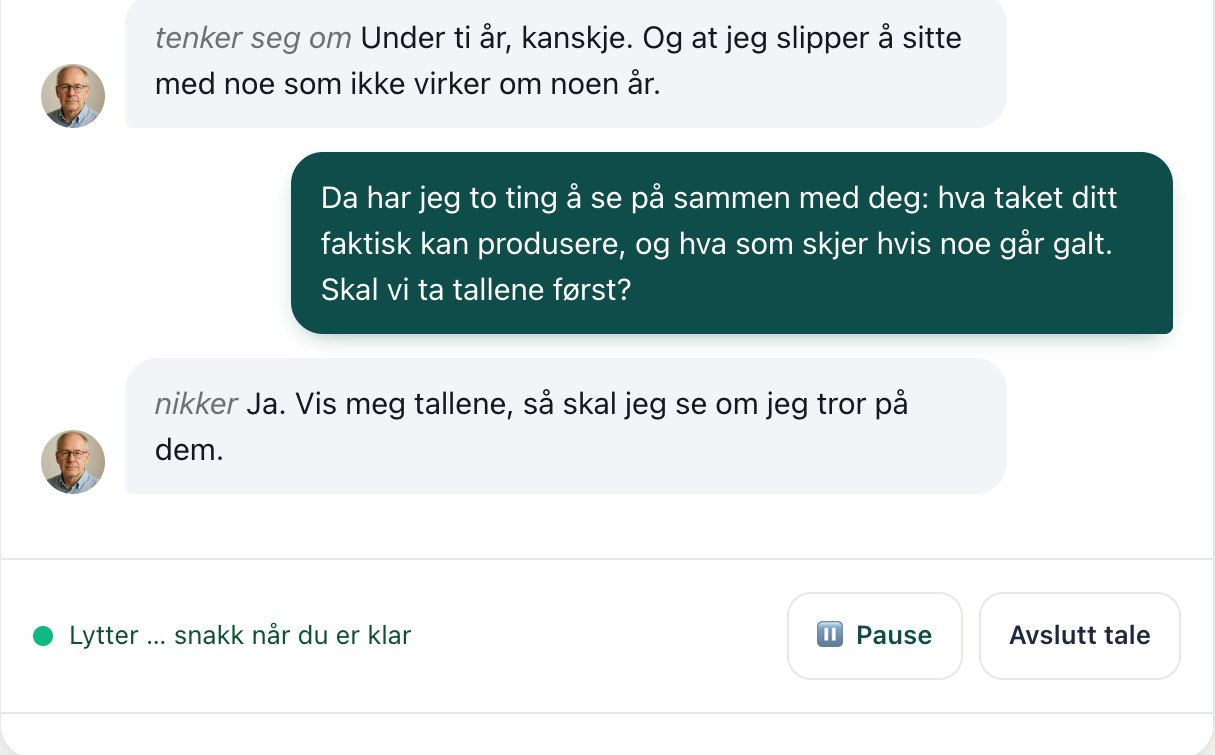
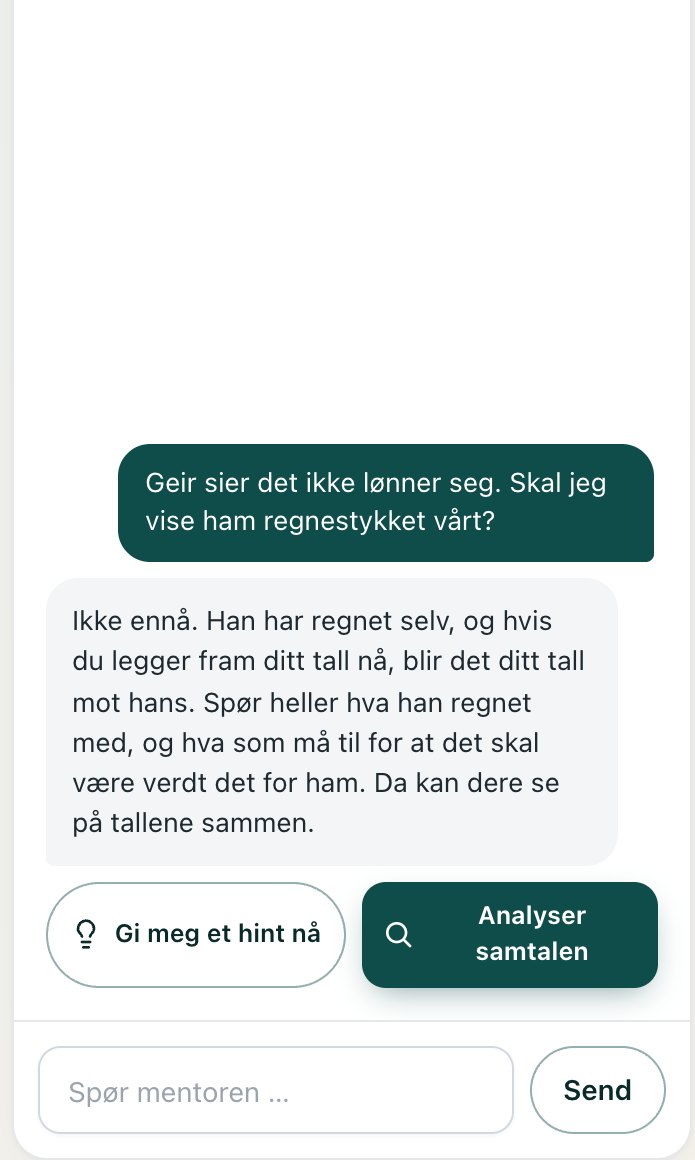

Fictional example · Havlys Energi · Illustration in Norwegian
Customers who respond
The customers have a history and reactions of their own, and respond to what your employee actually says.
- Type or speak. The conversation can be held by voice, like a real conversation.
- The mentor along the way. Ask for a hint, or ask the mentor what to do now.
- The analysis afterwards. What worked, how the conversation developed and what you can try next time.
The customers are fictional and created for the situations you face.
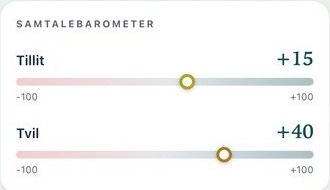
Fictional example · Havlys Energi · Illustration in Norwegian
See how the customer is feeling
A conversation barometer shows how the customer’s trust and doubt change during the conversation. That way your employee sees what builds trust, and what makes the customer more sceptical.
The barometer is adapted to what matters in your customer conversations.

Fictional example · Havlys Energi · Illustration in Norwegian
Practise tomorrow’s customer meeting
Your employee describes a customer meeting they are about to have, and the lab creates a customer to practise with. That way you can rehearse the meeting you are dreading, the day before it happens.
- Describe the situationYour role, who the customer is and what is at stake.
- Choose the difficultyFrom a cooperative customer to a demanding one.
- Practise straight awayThe lab creates a customer with a name, a background and reactions of their own. The barometer and the mentor are included here too.
The form reminds users not to enter real personal data.
A customer meeting is a conversation.
We are two psychologists who have built conversation training for managers, therapists and advisers. Trust, doubt, anger and resistance are the same in a customer meeting. That is why we create customers who react like people, not like a script.
Already in use: In Markedslab, employment specialists practise persuading sceptical employers. That is a customer conversation, and variants are in use with Norwegian employment services. About Markedslab →
Built with your best people.
We map the customer conversations
Which customer conversations are hardest, and what do your best people do there?
You: a manager or experienced employee, a few hours.
We build the lab
Courses, customers and exercises around your products, routines and customers.
We do the work.
Employees test it
A few employees try the lab, and we adjust until the customers behave like the real ones.
You: a few employees and a read-through.
The lab goes live
Your staff practise whenever they like, including just before a difficult meeting.
Individual user accounts for your staff.
Questions we often get.
Can’t find the answer? Talk to Stian →
Is there a ready-made lab for customer conversations?
No. We build the lab for you, on the same platform as the labs in use today. Havlys Energi on this page is a fictional example.
Can the lab be in English?
Yes. We build it in your language. The content, the customers and the feedback must then be checked by someone who knows both your customers and the language.
What does it cost?
We give a quote after a conversation. The price depends on how many customer situations the lab is to cover, and how many employees will use it.
What do we need to contribute?
A manager or experienced employee who knows the customer conversations, a few hours for mapping and reading through, and a few employees who test the lab before it goes into use.
Are the customers real people?
No. The customers are fictional and created by AI within frameworks you have helped to set. The lab must never be used with information about real customers.
Tell us which customer conversations you want to get better at.
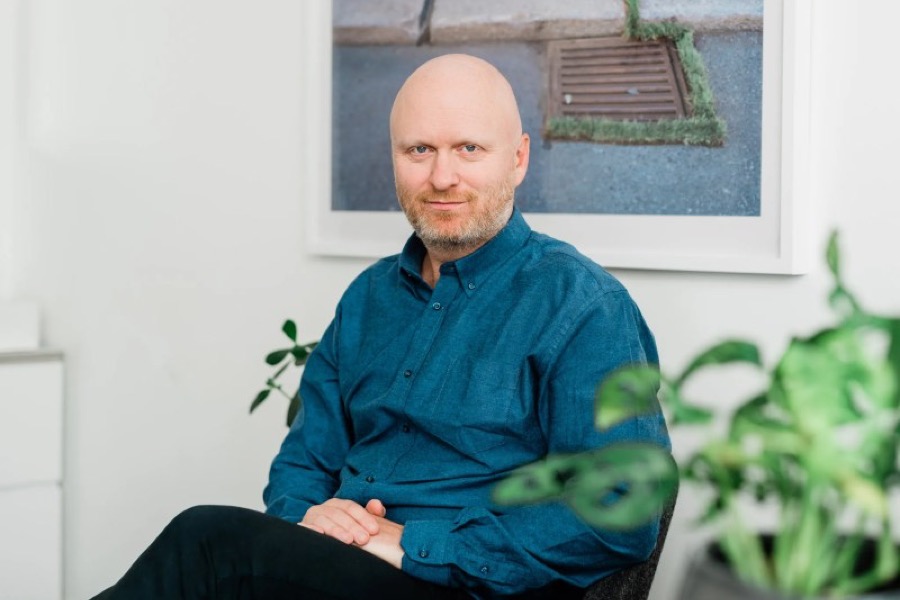
Stian Midtgård is a psychologist working with organisations and leadership, with more than 20 years’ experience of communication skills training for managers and frontline professionals. He built the platform.